A Gentle Movement Reset for a Desk-Bound Afternoon
A gentle movement reset for a desk-bound afternoon offers simple ways to change position, choose a comfortable activity and return to work without a workout.
A gentle movement reset for a desk-bound afternoon can start when you finish a task and notice your chair has held you in the same position for a while. Rather than turning that moment into an exercise session, choose one movement that suits your space and the work still ahead.
The point is not to reach a target or earn a break. It is to make a deliberate transition: shift your posture, take a few steps, or pause your screen work while you move your hands and feet.
What can a movement reset change in your workspace?
A reset can change how you use the space around your desk. A clear route to the kitchen might make a walk practical; a shared office or a call may favour a seated movement that does not interrupt anyone.
Start by looking at the immediate setup: where your chair sits, whether there is room to stand, what lies on the floor, and whether you need to stay near your computer. Those details help you choose an activity without adding preparation.
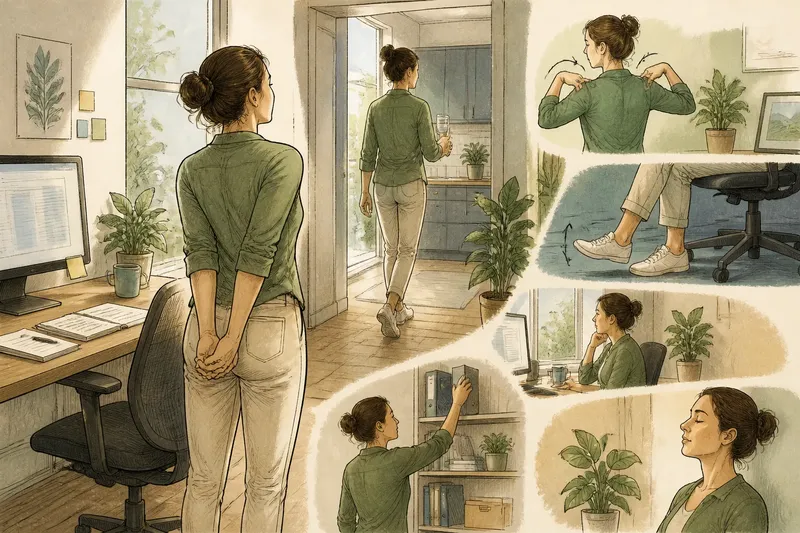
Imagine you have finished writing an email, your next task is at the same desk, and a clear hallway leads to the kitchen. You stand, walk to the kitchen to refill your glass, and return to sit before opening the next document. The result is observable: you have left the chair, taken a short walk, and come back ready to continue, without changing your work plan.
Let the room you have—not an imagined ideal setup—shape the choice.
Which movement suits the space and task?
Match the action to the furniture, floor space and task at hand. A clear patch beside the desk allows a standing option; a crowded room may make a seated change or a pause from the screen more suitable.
- Stand and shift: If the floor beside your chair is clear and standing feels comfortable, stand and settle into a relaxed position; if not, stay seated and adjust your posture.
- Move your shoulders: If you can move your arms freely without striking a desk or colleague, try gentle shoulder rolls; if space is tight, keep your arms down and choose a small hand or foot movement.
- Walk to a nearby place: If the route to the kitchen, window or printer is clear and the task can wait, walk there and back; if the route is busy or you must stay available, choose a movement at your desk.
- Use a seated option: If standing is awkward or inaccessible, shift your position, relax your hands or move your feet while seated; if even that feels uncomfortable, pause without moving and return to the task when ready.
- Pair movement with a work errand: If you need to collect a paper from a nearby shelf and can do so safely, stand and retrieve it; if carrying items would make the movement awkward, leave them in place and choose an unhurried alternative.
- Make room first: If a bag, cable or chair blocks your intended path, move the obstruction only if you can do so safely; otherwise choose a clear spot or a seated option.
These options are not a circuit. Pick the one that fits the actual task and surroundings, then return to what you were doing.
How can you make the movement comfortable?
Keep the action easy enough that you can stop or change it without fuss. If a movement causes pain, dizziness or another worrying sensation, stop rather than pushing through; if symptoms persist or you are uncertain about suitable activity, ask a qualified health professional for advice.
Clothing, footwear and furniture can affect what feels workable. A chair that rolls, a narrow gap between desks or a slippery floor may make a standing or walking option unsuitable in that moment.
If you are unsure, choose a familiar, simple movement or stay seated. There is no need to copy a complicated stretch from a video just to make a pause count.
How long should an afternoon reset take?
There is no required duration. Standing to reach a nearby item and taking a relaxed walk to another room are both possible ways to change position; the pause ends when you are ready to continue or need to return to work.
On a busy afternoon, a brief change may fit more easily than leaving the desk. With more room in your schedule, you might choose a longer walk, provided it feels comfortable and does not create pressure to make every reset last as long.
Think of the pause as a choice about movement and attention, not a minimum dose you must complete.
What if you cannot leave your desk?
Choose from the movements available where you are. If a call or urgent task keeps you at the computer, you might relax your hands, adjust your seated position or look away from the screen during a natural pause.
In a shared office, subtle movement may be easier than walking through a busy room. If movement is inaccessible or uncomfortable, that is not a failure; a pause without movement may be the right fit for that moment.
How can you avoid turning a reset into a rule?
Treat each pause as an invitation, not a requirement. Missing a convenient moment does not create anything you need to make up later.
For instance, imagine your afternoon begins with a call at your desk, then a clear gap before a document review. During the call, you stay seated because leaving would disrupt the conversation; in the gap, you stand beside the chair and walk to the kitchen, then return to review the document. The decision changes with the setting, and the observable result is that you have chosen one movement when it fit rather than forcing the same routine throughout the afternoon.
Ask yourself whether a change of position suits this moment. If it does, choose one; if it does not, carry on and reconsider at another pause.
Which movement reset questions do readers ask?
Does a movement reset have to be a workout?
No. It can be a change of position, a comfortable movement beside your desk or a walk to a nearby room. You do not need special clothing or equipment.
Is standing useful if I cannot walk away?
If standing feels comfortable and your workspace allows it, it is one option. If it is awkward or inaccessible, stay seated and choose a comfortable adjustment, or leave movement for another pause.
What should I do if movement feels uncomfortable?
Stop or switch to an easier option rather than pushing through pain or a worrying sensation. For persistent discomfort or questions about what is suitable for you, consult a qualified health professional.
Do I need to repeat the same movement each afternoon?
No. The desk, task and available space can all differ, so the practical choice can differ too. A gentle movement reset for a desk-bound afternoon can be a walk on one occasion and a seated change on another.
Before returning to the screen, decide whether you want to sit, stand or remain where you are. Checking that the next position feels workable gives the pause a clear end without adding a new rule to your afternoon.