A Pause, a Walk or a Quiet Task? Three Kinds of Rest
Three kinds of rest suit different breaks: compare a still pause, gentle walk or quiet task, then choose an option that fits your attention and surroundings.

A pause, a walk or a quiet task can make a break feel different. The three kinds of rest each offer a distinct choice: reduce input, change your physical setting or give your attention a simple focus.
You can switch between them as the day changes. A quieter moment after a noisy meeting may suit you better than the same activity you would choose after a long stretch at a screen.
When does a still pause fit best?
Choose a passive pause when sound, conversation or decisions feel like enough for now. Sit somewhere comfortable, let your hands rest and put your phone out of reach if that is practical. You do not need to make your mind blank or turn the break into an exercise.
This option asks little of your body and attention. It may suit the space between demanding tasks, especially when even a pleasant activity sounds like one more thing to manage.
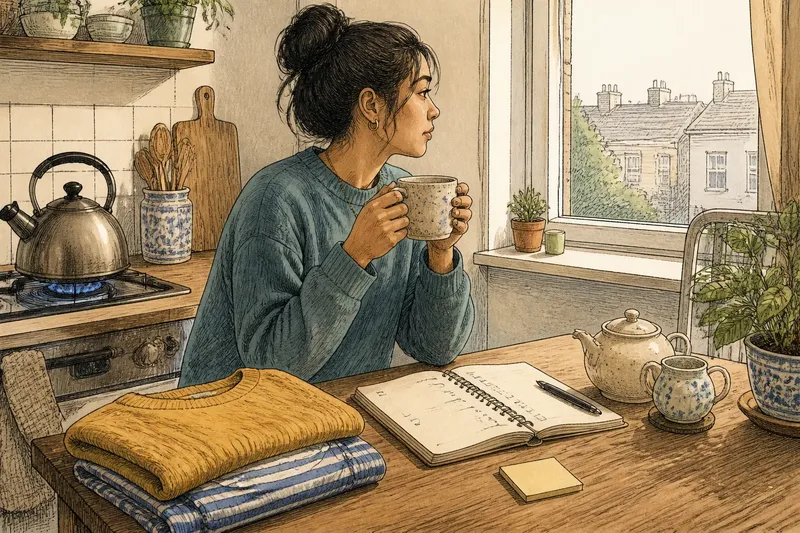
If silence feels uncomfortable, reduce input without removing every point of focus: look out of a window, listen to quiet ambient sound or sit with a warm drink. The aim is a softer stretch of attention, not perfect stillness.
Close the work in front of you and let the gap remain unfilled.
When is a gentle walk a better break?
Try gentle movement when sitting still leaves you feeling stuck or a change of view sounds welcome. A relaxed walk along a corridor, around a garden or down a familiar street can change your posture and surroundings without making the break a workout.
Keep the pace easy enough that you are not chasing a target. You might notice the air by a doorway, the feel of your shoes on the pavement or the daylight across a room. These details give your attention somewhere to land while you move.
A walk may not suit every setting. If you need to remain available, your surroundings are difficult to access, or movement feels uncomfortable, consider another option. You could stand by an open window or stroll between rooms instead of going outdoors.
Let the walk be a break, not another item to track.
Who might prefer a quiet, absorbing task?
A low-pressure task can suit you when unstructured time makes it hard to settle, but focused work feels too demanding. Choose something familiar, bounded and easy to leave unfinished: watering a plant, sorting postcards, sketching shapes or folding clean laundry.
The task gives your attention a gentle anchor. Unlike scrolling, it has a physical focus; unlike a work assignment, it need not produce a polished result. Choose an activity with few decisions and no urgent deadline, so it remains a pause rather than becoming another obligation.
Say you have just finished several online meetings and feel restless, yet sitting quietly seems unappealing. You choose to water the plants near your desk, stop when the soil feels damp, and leave any other plant care for later. The observable result is a clear stopping point and a shift from screen-focused attention to a simple hands-on task; whether that feels restful is yours to judge.
How do the three kinds of rest differ?
- Passive pause: Notice that conversation or sound feels like too much. If less input sounds welcome, sit somewhere quieter; if silence feels uncomfortable, look out of a window instead.
- Gentle movement: Notice that sitting still feels confining. If a change of posture sounds appealing, walk along a familiar corridor; if moving feels uncomfortable or impractical, choose a seated pause.
- Quiet task: Notice that open-ended downtime feels hard to settle into. If a familiar activity feels manageable, water one plant; if it starts to feel like a chore, stop and choose a less demanding pause.
- Changing course: Notice that your chosen break has become effortful. If another option feels more comfortable, switch to it; if no option appeals, let the break be brief and uncomplicated.
- Practical setting: Notice whether your space allows the break you had in mind. If it does, use that option; if it does not, adapt it by choosing a quieter corner, an indoor stroll or a simple hands-on task.
- Stopping point: Notice whether your activity has an obvious place to stop. If it does, pause there; if it does not, choose a smaller task or leave it unfinished without adding a new target.
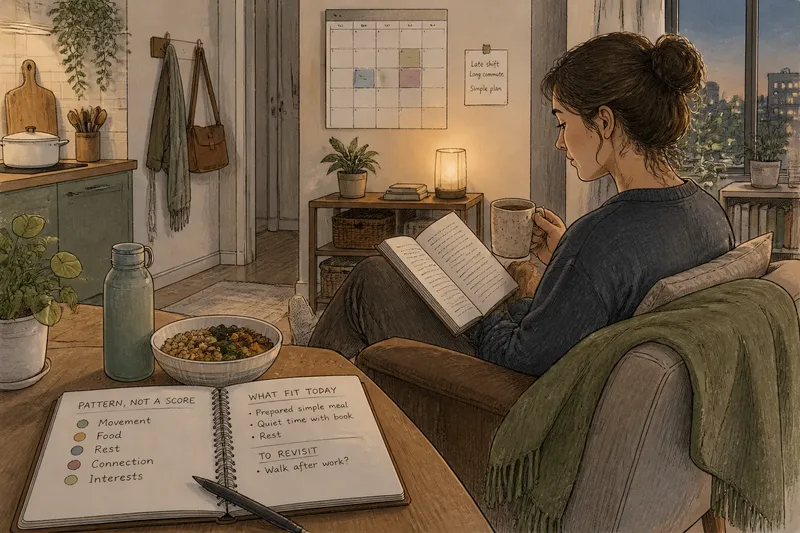
These are options, not personality types. You might want silence one afternoon and a slow walk the next; even one break can shift from one mode to another.
Which kind of rest fits your situation?
What should I choose after a noisy or social stretch?
Try a passive pause in a quieter spot, since less input may be what you want. If stillness feels uncomfortable, give your attention a simple focus, such as looking outside.
What if sitting still makes me feel restless?
Try gentle movement at an unhurried pace, indoors or out. If walking is impractical or uncomfortable, change position or choose a different kind of pause.
What if I find an empty break hard to fill?
Choose a familiar, low-pressure task with an obvious stopping point, such as watering one plant or sketching a few shapes. If it starts to feel like a chore, stop rather than turning it into a list of jobs.
Can I change my choice partway through a break?
Yes. If a quiet task begins to feel effortful, stop and sit; if a pause leaves you fidgety, get up for an easy walk if that feels comfortable and practical.
How can you keep a break from becoming another task?
Make the choice small. Decide whether you want less input, a change of physical state or a gentle focus, then pick the simplest available option. You do not need to combine them or judge the break by how productive you feel afterwards.
Let practical limits shape the choice. In a shared office, a busy household or poor weather, a quieter corner, an indoor corridor or a small hands-on activity may be more workable than the break you first imagined.
When choosing among these three kinds of rest, match the option to what you want from the next moment: quieter surroundings, a change of posture or a gentle focus. If the choice stops feeling comfortable, change it; a break does not have to follow a script.